From Failing AP Bio to Bestselling Author: Dr. Justin Gregg on Detours, Dolphins, and Trusting the Process
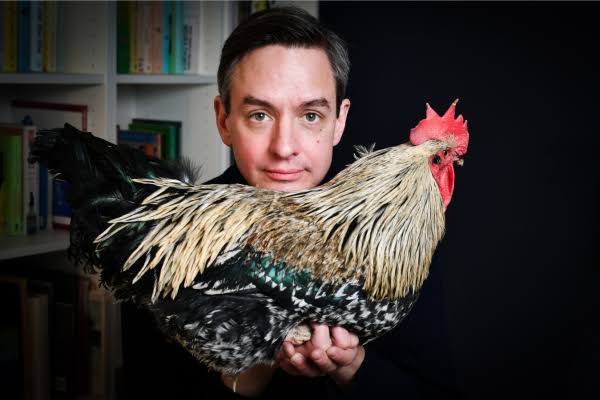
Students in the Class Cohort Program WTMA recently welcomed Dr. Justin Gregg, bestselling science author, university professor, dolphin researcher, voice actor, and self-described “dad band” musician, to talk about the winding road that took him from a failed AP Biology class to a career studying dolphins in the wild and writing about animal intelligence. Dr. Gregg offered a candid, funny, and often surprising account of how grit, curiosity, and a willingness to say yes to strange opportunities can add up to a life well-lived.
No Plan, No Problem
Dr. Gregg told students that as a teenager, he had no future plans “in a sort of ridiculously comical way.” The one exception: a childhood fascination with whales. Otherwise, he coasted through senior year, developed a bad case of senioritis, and even failed AP Biology. He then was sent by his parents to Sweden for a gap year because they were not convinced he was ready for college. When he arrived he spoke zero Swedish, then was immersed in an all-Swedish high school, and came out the other side fluent and unexpectedly fascinated by language and linguistics.
That spark followed him to the University of Vermont, where he majored in sociolinguistics. Still no science classes in sight. And, as he put it to laughs from the group, a sociolinguistics degree does not exactly “lead straight into a high-powered six-figure job.” He was still figuring things out.
Zipper Counters, Boy Bands, and a Visa Problem
After college, Dr. Gregg had met his future wife during a university exchange. When she was accepted into a PhD program in Ireland, he followed her to Dublin. The catch: they weren’t yet married, so he needed his own reason to stay in the country. His solution was a degree in sound engineering and music technology, chosen mostly because he liked playing guitar.
That degree led to a year recording boy bands during Ireland’s boy band boom. Once he and his now-wife married, he no longer needed a student visa, so he took whatever jobs he could find to support her PhD: a stint at the Guinness factory, eight hours a day counting zippers in a textile factory, an administrative job on a pediatric oncology ward, and, memorably, localizing video games like Half-Life and Counter-Strike into German and Swedish. His last stop was an insurance job he described as “mind-blowingly awful.”
The Screensaver That Changed Everything
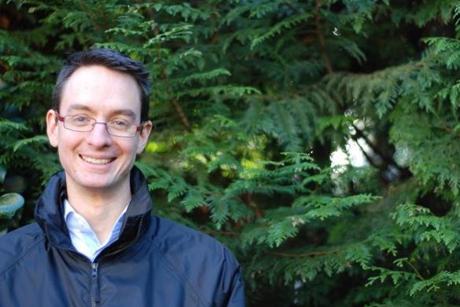
It was during that insurance job where he stared at a dolphin screensaver day after day that Dr. Gregg remembered his childhood love of whales, and a dream of studying dolphins. With no science background to speak of, he spent a full year in the library teaching himself biology from scratch before applying to, and talking his way into, a PhD program. He was in his late twenties by then, which he says made all the difference: “The older students are usually the better students when it comes to master’s and PhD work,” he told the group, “because they’re more likely to work independently and be really driven.” He completed his PhD in just three years, which is unusually fast, and with no revisions required on his dissertation.
Before the PhD fully took over, Dr. Gregg also stumbled into a side career as a voice actor in Dublin, simply by telling local studios he was one. It led to commercials, radio work, and even a couple of animated films, including one alongside Nicola Coughlan. A recording of comedy songs he wrote on guitar for friends found its way to a local radio station, which turned him into a recurring guest on a morning comedy show. All of these little details delighted our WTMA students.
Swimming With Wild Dolphins
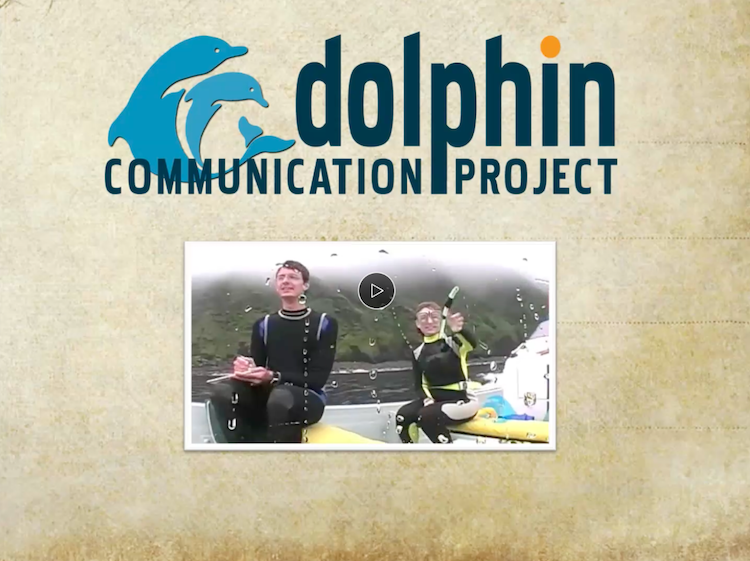
True to his research interests, Dr. Gregg insisted on studying dolphins in the wild rather than in captivity. He trained in the Bahamas and then spent three summers on a volcanic island 150 kilometers off the coast of Tokyo, swimming with and recording wild dolphins before returning home to analyze the data. After earning his PhD, he stayed on with the nonprofit Dolphin Communication Project as a researcher, running its podcast and website.
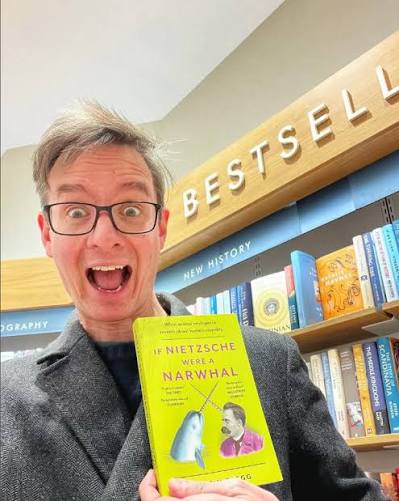
When his daughter was born, he became a stay-at-home dad for about five years, a role he’d wanted since childhood. It was during that time, in his free hours, that he wrote his first book, Are Dolphins Really Smart?, which challenged the popular idea that dolphins might be more intelligent than humans. A move to Canada and a new literary agent followed, leading to his bestseller If Nietzsche Were a Narwhal, about the costs and benefits of human intelligence compared to the rest of the animal kingdom, and later Humanish, on anthropomorphism and why our brains are wired to see faces, and humanity, everywhere we look.
“There’s No Such Thing As Luck”
Asked how he kept landing in the right place at the right time, Dr. Gregg firmly rejected the idea of luck as chance. “Luck could mean being in the right place at the right time,” he said. “But you’re not going to get that opportunity… unless you’re already prepared for it.” He pointed to his own path as proof: his sound engineering degree became essential for recording dolphin sounds underwater; his linguistics background gave him the grounding to study communication in the first place. He emphasized, “there’s already like six or seven years of preparation just to be lucky enough to get the opportunity.”
He also credited simple kindness and curiosity (genuinely being interested in other people) as one of the most underrated career skills. “If you want to make friends, all you need to do is ask them questions about themselves,” he said, encouraging students to nurture relationships and community rather than thinking of networking as transactional.
Writing, Raising a Daughter, and Staying Flexible
Several students asked about writing as a career. Dr. Gregg was candid that it’s possible but rarely lucrative on its own. Most writers, himself included, rely on other income, and breaking into the book world usually requires demonstrated expertise in something else first. He also shared advice he’s given his own daughter (who is currently taking a gap year in Norway): the only opinion of yourself that truly matters is your own.
Above all, Dr. Gregg urged students to get comfortable with change. Because the job market and even entire fields will look different by the time today’s students enter them, he argued that flexibility matters more than any specific plan. He encouraged students to try things and fail, because “the only way you can really become more flexible in your thinking is to fail very often,” he said, describing failure as the thing that loosens your grip on any one idea and frees you to generate new ones. Finally, he advised students to live by “strong opinions, lightly held.” It’s a fitting way to describe his own path: a life built not on a plan, but on curiosity, preparation, and a willingness to follow wherever the next strange opportunity led.
Thank you, Dr. Gregg, for your time with our students!