18 Easy Steps to Become a Silicon Valley Executive by Bill Fusz
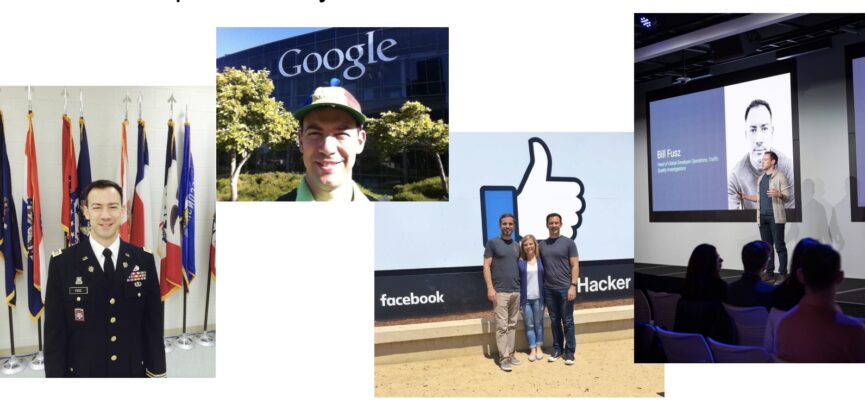
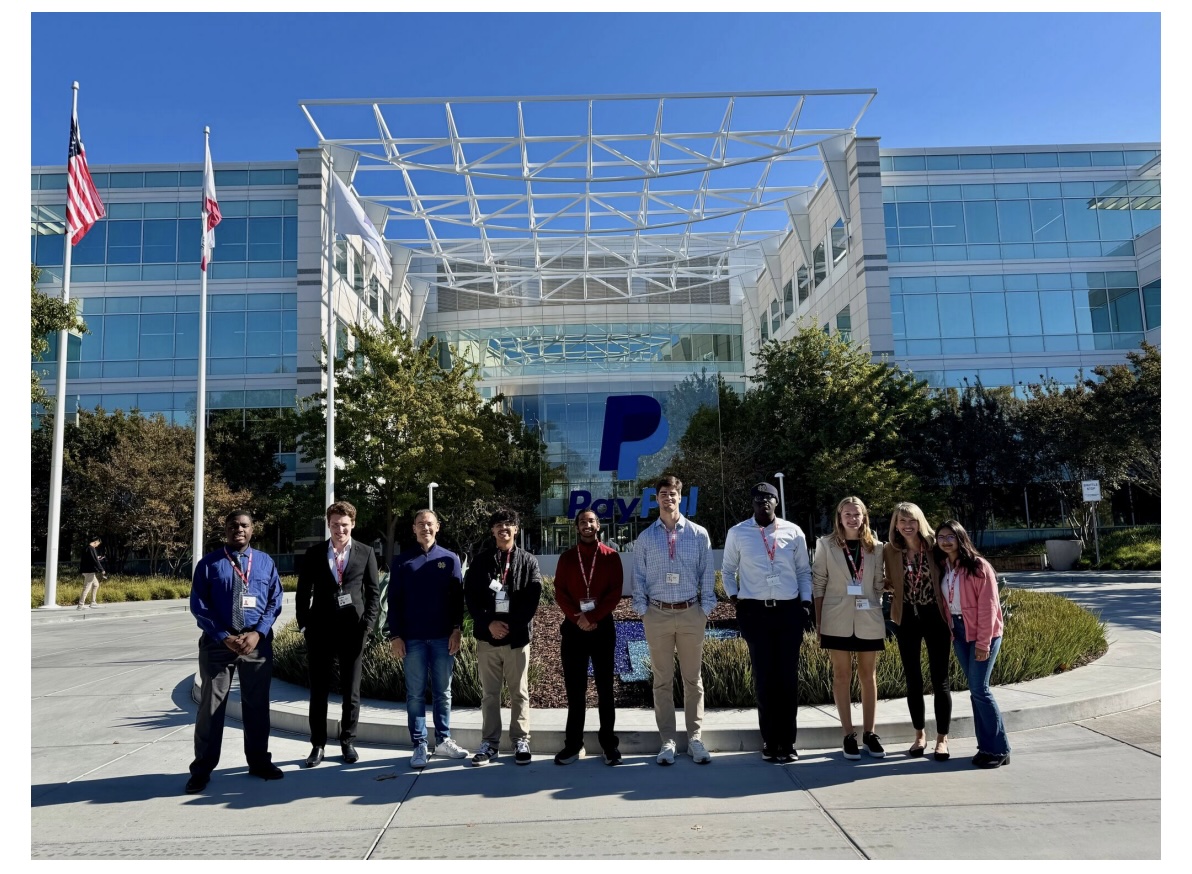
Students in the Class Cohort Program at WTMA welcomed Bill Fusz, VP of Operations at PayPal, for a look back at a career that took him from Notre Dame to the deserts of Iraq then to the boardrooms of Facebook, Google, and PayPal.
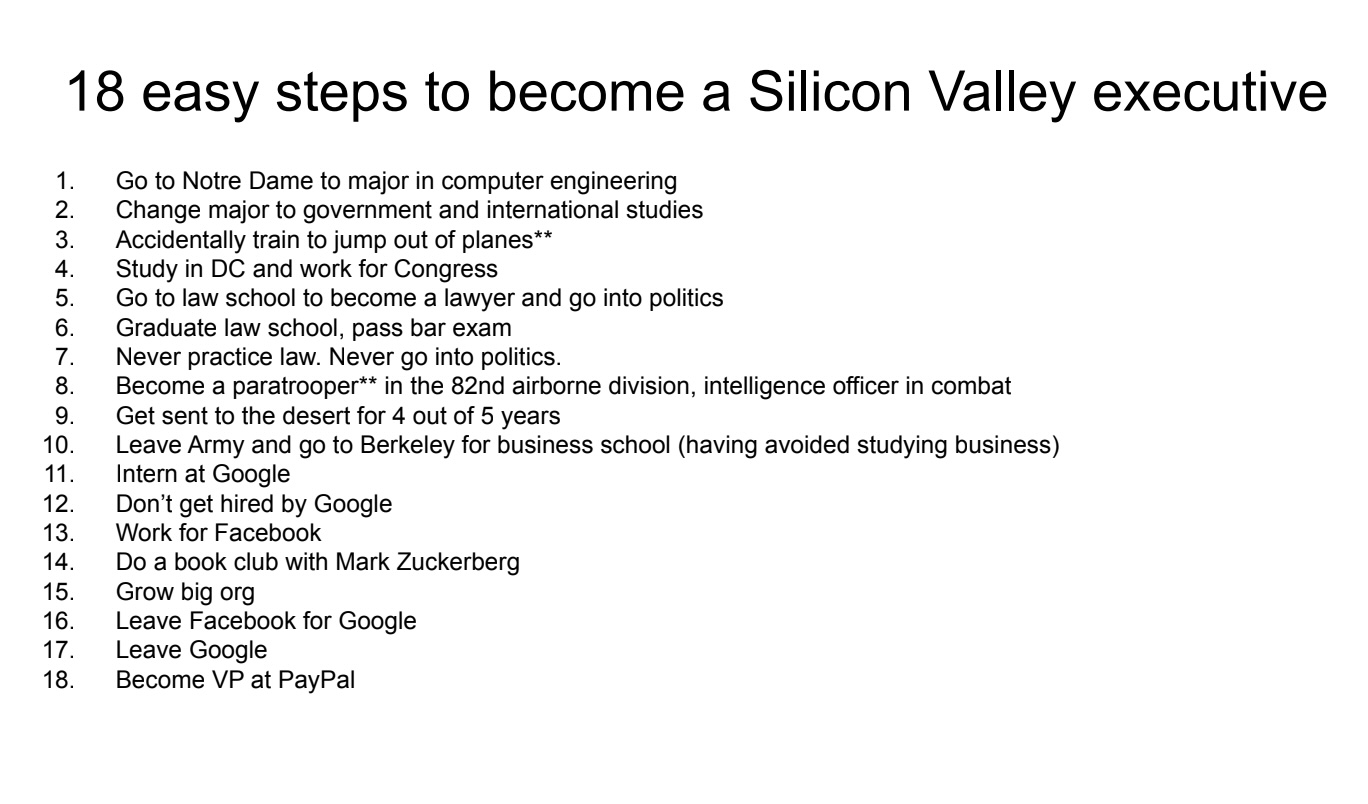
Mr. Fusz opened with what he called his “18 easy steps to become a Silicon Valley executive,” a joke list (see below), before making clear that none of it was planned.
A Major That Didn’t Fit
Mr. Fusz arrived at Notre Dame certain he wanted to be a computer engineer and end up in Silicon Valley. The trouble was, computer engineering at the time meant a year and a half of physics and chemistry before any coding. He says, “If I’d had the chance to talk to actual people working in jobs that I hoped to work in,” he would have realized computer science, not computer engineering, was more up his alley. So he switched his major, but to something else entirely: government and international studies.
Ladders, Spirals, and an Unplanned Jump
Mr. Fusz explained that his career was not like a ladder, where you take the right classes, the right internships, and climb steadily in one field. He describes his journey more like a spiral, where you build a collection of connected skills across different, sometimes unrelated, fields.
You can move between the two, as well. Mr. Fusz climbed his ladder in college: he studied government, interned in Washington during the 2000 election, and, through ROTC, was commissioned as a second lieutenant, with the Army agreeing to let him finish law school first.
From Law School to the Desert
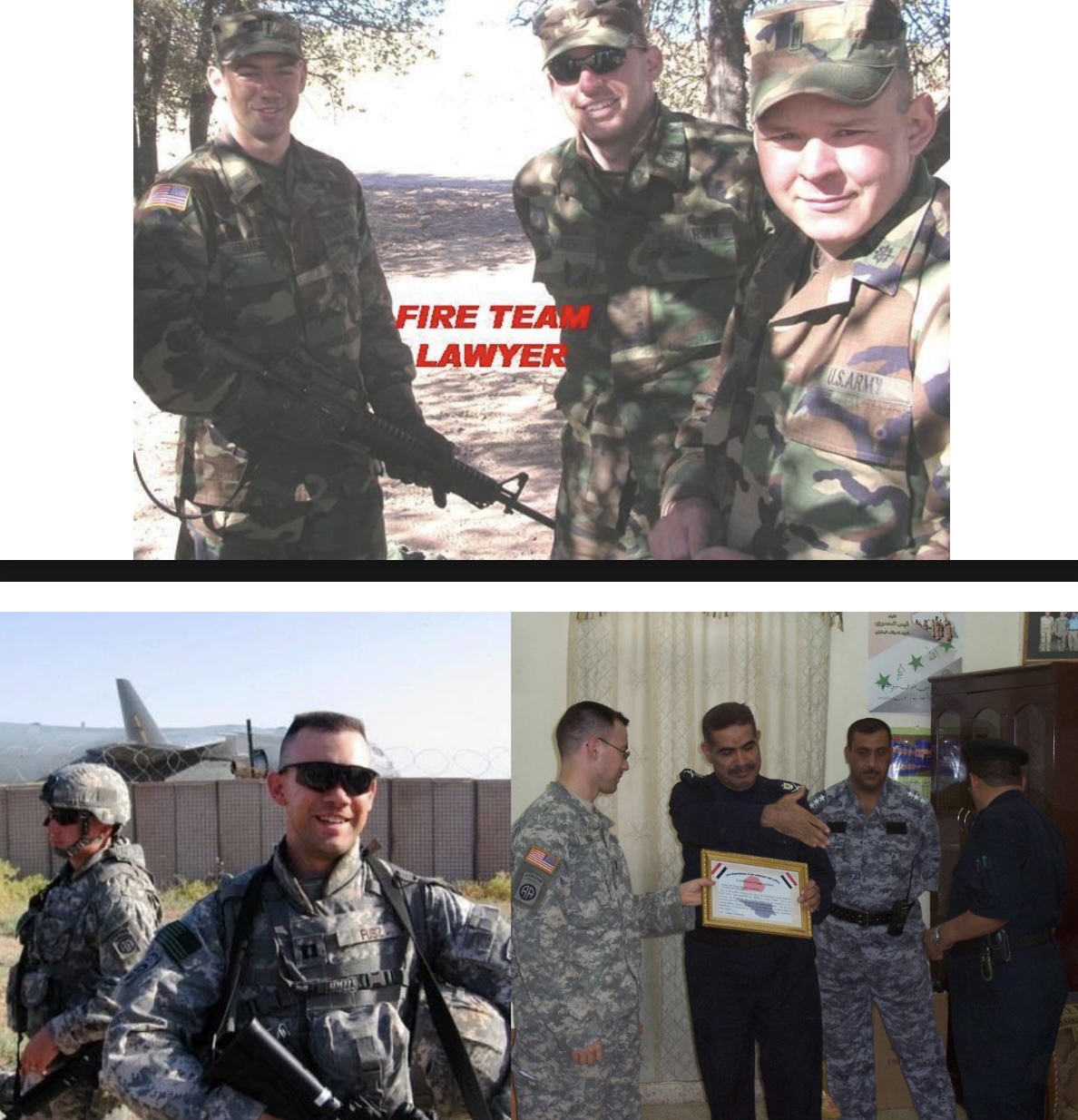
Mr. Fusz graduated law school in 2005, at the height of the Iraq War, and passed the Illinois bar. Then he was told by the Army that they didn’t need another lawyer, but rather intelligence officers. Because of his previous education and training, Mr. Fusz was sent to the 82nd Airborne Division as a paratrooper and intelligence officer. He deployed to Iraq for four of his next five years. He pulled together reconnaissance, human intelligence, and signals data into a coherent picture for commanders, the way a meteorologist predicts weather. “Our forecast for IED activity today is light,” he said, describing a typical briefing, a very different reality from the courtroom drama he had trained for.
Reading Terrain, Moving Armies, Saving an Ancient City
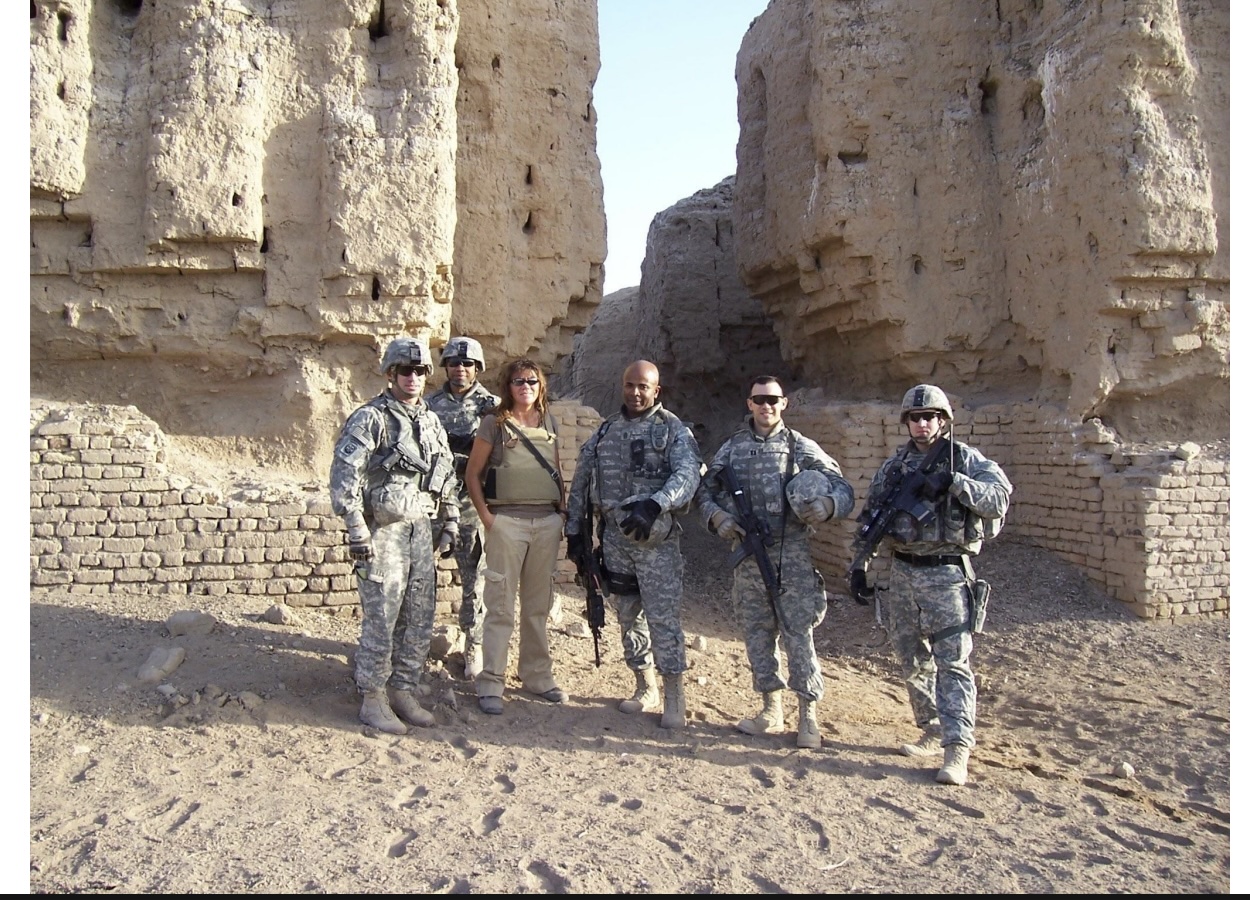
Mr. Fusz’s love of technology made him the unofficial IT manager for a 500-person unit during his time in the desert. His background in history and government led him to research the tribal and political dynamics of the Iraqi province where he was stationed. In one memorable story, an Iraqi general asked his commander to help move troops off an ancient site without damaging it. Nobody else knew what “the city of Kish” even was, so the job fell to Mr. Fusz. His research turned up a team of U.S.-government archaeologists in Baghdad, and he ended up helping negotiate a safe handoff of a 6,000-year-old site, predating the pyramids, back to Iraqi protection.
Choosing Family Over the Climb
Despite being good at the work and largely enjoying it, Mr. Fusz chose to leave the Army after seven years. He had two young children by then, had already missed his son’s first steps during a deployment, and did not want to keep missing that much of his family’s life. He also came to see a military career as an especially rigid ladder, one with almost no room to change course if a posting or a boss went badly. “Sacrificing so much of my family time and rolling the dice on my career while I enjoyed it and while I was good at it, just didn’t seem like a great avenue for me personally,” he said, adding that others reasonably make the opposite choice.
Career Capital and the Road to PayPal
Leaving the Army meant choosing between two paths: return to law, where his military years would count for nothing, or pivot into the business world he’d always been drawn to. He leaned on an idea from Georgetown professor Cal Newport called Career Capital Theory, which is the notion that a career is best built not by chasing prestigious titles, but by accumulating rare and valuable skills, whether by going deep in one area or experimenting across several. Mr. Fusz went to Berkeley for business school, interned at Google (but wasn’t hired), and then landed at Facebook, where he even joined a yearlong book club with Mark Zuckerberg.
He grew a team there from just himself to 150 people before making a move that some mentors warned against: stepping down to lead a team of just four in public policy. That instinct paid off. When PayPal called about the VP role he holds today, he said he “felt really confident in the story of why I was right for this job.” Mr. Fusz draws daily on his legal training for compliance work, his military and Facebook experience for operations, and the leadership lessons he’s collected along the way.
What He’d Tell His Younger Self
In the Q&A, students asked whether he ever saw his years of training or education as wasted. Mr. Fusz said he used to feel that way, joking that his law degree was “a mortgage on a very small home that existed only in my head.” But looking back, he sees it differently: “Life has to be lived forward but can only be understood backward,” he said, and encouraged students to focus less on whether a choice will pay off and more on what they’re learning in the moment.
He was equally candid that most career decisions are far more forgiving than they feel at 18. Outside of a handful of fields with expiration dates (professional athletics, for instance), “there are lots of ways to get it right.” On networking, he pushed back on the word’s reputation: it isn’t about angling for favors, but about staying in touch with people you genuinely like, which is how his own path repeatedly circled back on itself, including the former colleague who eventually recruited him to PayPal. Finally, he made the case for both ambition and family without treating them as a trade-off: with intention and firm boundaries around personal time, he said, “you can do a lot more in that space than you sometimes think that you can do and still achieve your professional goals.”
Thank you, Mr. Fusz, for your time with our students!